
India-Poland Ties Enter a New Era as Trade Expansion and Geopolitical Convergence Take Center Stage
A Partnership Defined by Cooperation
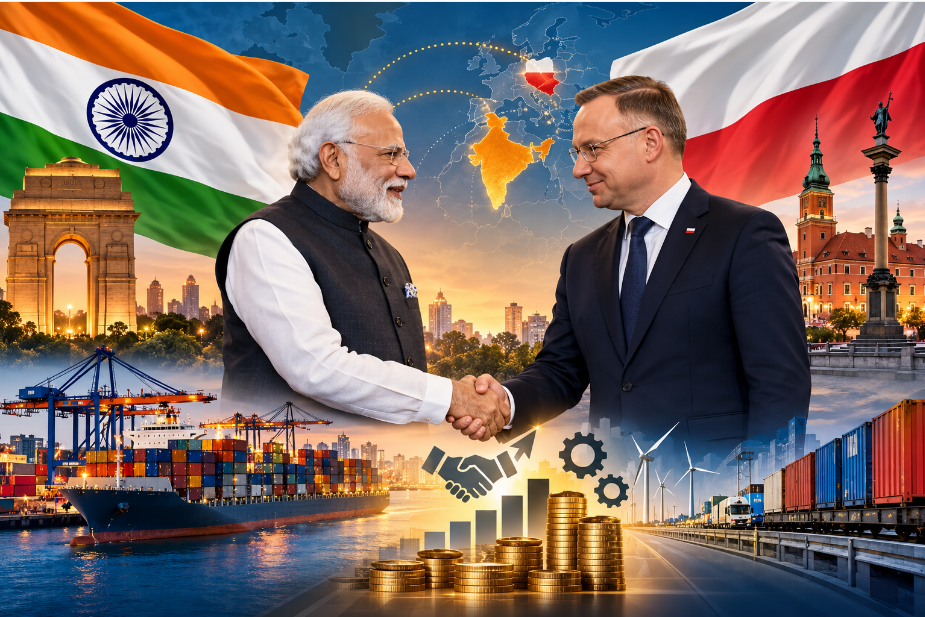
India and Poland share a relationship completely free of conflicts of interest, stated Polish Prime Minister Donald Tusk following high-level bilateral talks. Tusk praised Prime Minister Narendra Modi as a beacon of hope during a period marked by deep political uncertainty and instability across the globe. This crucial engagement marked Tusk’s first official visit to India as Prime Minister since 2010, underscoring a mutual intent to revitalize long-standing ties between Central Europe and South Asia.
Expanding Sectors and Regional Stabilisation
During the extensive dialogue, the two leaders mapped out clear blueprints to expand India-Poland cooperation across several key strategic fields. The primary focus areas for future collaborative ventures include:
- Space Technology: Driving joint research and orbital mechanics exploration.
- Transportation: Enhancing multi-modal cargo transit infrastructure.
- Renewable Energy: Deploying sustainable power grids and green solutions.
- Technology: Scaling up cross-border digital commerce and software services.
The leaders also engaged in deep discussions regarding India’s four-point proposal aimed at mitigating the far-reaching economic and human costs of the ongoing Russia-Ukraine conflict.
A Strategy to Double Bilateral Trade
While the two sides did not sign any formal agreements immediately following their bilateral talks, they established an ambitious commercial roadmap. India and Poland are actively targeting a doubling of bilateral trade from its current low baseline of $6 billion.
This trade trajectory is expected to receive a massive institutional boost in the coming weeks. The volume of cross-border commerce is projected to rise sharply after the long-anticipated India-European Union Free Trade Agreement is formally signed in December. This upcoming economic framework will permanently lower tariff barriers, providing Polish and Indian businesses direct access to expanded consumer markets.
China's TBM Export Controls Expose Critical Vulnerabilities in India's Infrastructure Supply Chain
The Enforcement of New Export Restrictions
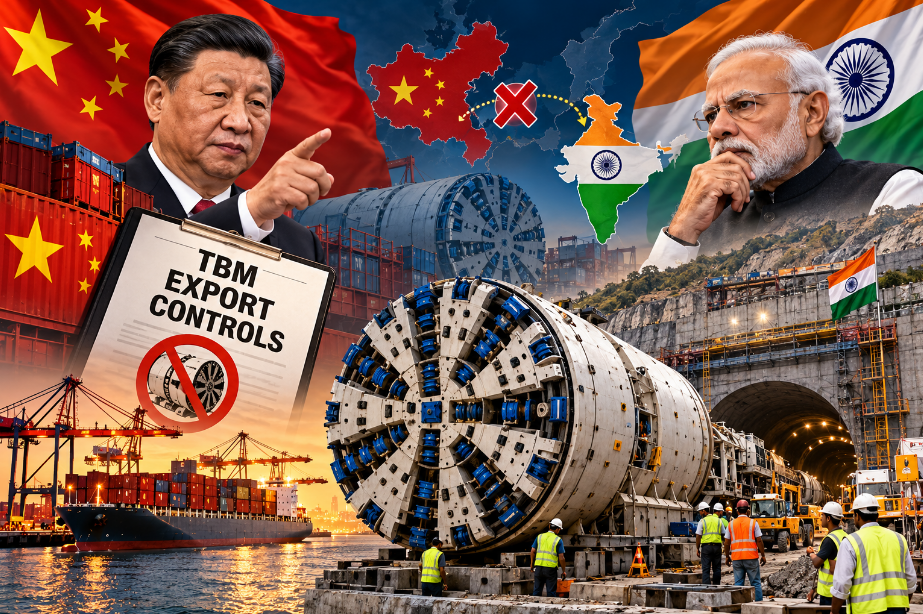
The Chinese Ministry of Commerce and the General Administration of Customs decision to place tunnel-boring machines (TBMs) on an export control list reveals a stark blind spot in India’s supply chain diversification. Set to take effect from November 18, these strict curbs apply directly to heavy engineering equipment, including TBMs, walking excavators, and high-altitude wet shotcrete machines. Under the new protocol, if a shipment is intended for countries or regions deemed sensitive due to ongoing disputes with China, exporters will be mandatorily required to obtain an export licence from Chinese commerce authorities. For all other destinations, exporters must be registered, secure an export certificate, and submit rigorous end-use declarations guaranteeing that the equipment will not be re-routed to any restricted zones.
The Global Dominance of Chinese Manufacturing
The regulatory shift deals a heavy blow to global construction logistics, as China has successfully cornered around 70% of the global TBM market. Even prominent heavy-machinery manufacturers based in Western nations maintain substantial component supply chains within China to lower their manufacturing overhead.
TBMs are highly complex, custom-built machines that must be precisely configured to the unique geological characteristics of each project site to perform numerous tasks simultaneously. Because a single suitable TBM can be utilized for both civilian infrastructure or military engineering purposes, China has classified them under strict strategic oversight.
Impact on India's Mega Infrastructure Projects
India is no stranger to these logistical bottlenecks, having struggled with Chinese TBM-related hold-ups for at least two years now. These delays have directly impacted high-priority national ventures, including the Mumbai-Ahmedabad High-Speed Rail Corridor.
These 3,000-tonne machines are playing a crucial role in constructing the country’s first 508-km bullet train project, which features a highly complex 7-km undersea rail tunnel. Currently utilized across Europe, Canada, the US, and Australia, TBMs ensure a much safer excavation process than conventional underground blasting methods. This safety factor is especially vital for the Indian high-speed rail network, where the planned tunnel passes directly beneath densely populated urban areas.
Navigating High Capital Costs and Alternatives
The economics of TBM production differ significantly from conventional construction equipment. Establishing new manufacturing plants requires a guaranteed minimum number of continuous orders alongside immediate access to advanced industrial capabilities to design, manufacture, and repair highly specialized components. While Germany's Herrenknecht AG set up a domestic assembling and refurbishing facility in Chennai back in 2007-08, India remains one of the world's largest importers of these machines.
Expecting every single sophisticated TBM to be produced entirely domestically is economically unviable and would send public infrastructure costs soaring. Depending on Beijing's final decision regarding the TBM shipments earmarked for India, New Delhi may soon be forced to redirect its procurement directly to manufacturing facilities based in Germany or Japan, forcing the country to absorb significantly higher capital costs to keep its infrastructure timeline on track.
UNEP Emissions Gap Report 2026 warns 1.5°C Warming Limit No Longer Achievable Without Overshoot
The Closing Climate Window
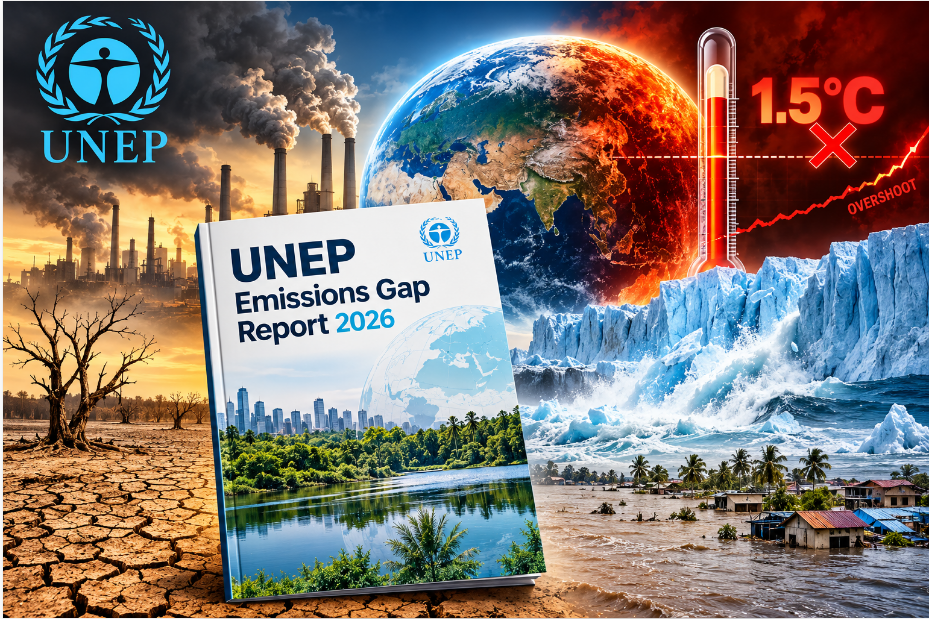
The United Nations Environment Programme has released its Emissions Gap Report 2026: The Point of Return, warning that keeping global warming within the Paris Agreement’s 1.5°C guardrail without overshoot is no longer possible. The 17th edition of this annual scientific assessment tracks the widening discrepancy between projected global greenhouse gas emissions under current national pledges and the trajectories required to avoid catastrophic climate change. Due to inadequate global emission reductions, overshooting the 1.5°C warming threshold is now virtually unavoidable. To safely limit long-term warming, the report outlines that global emissions must aggressively decline by 18% by 2030, 45% by 2035, and 69% by 2040, relative to 2025 baselines.
The Widening Emissions Gap and Policy Realities
The report highlights a severe shortfall in current international commitments, noting that the existing 2035 Nationally Determined Contributions leave a massive 16 GtCO₂e emissions gap. These pledges deliver a meager 11% to 15% reduction compared to the 45% required to prevent severe warming. If current global policies remain unchanged, the planet is on track for a dangerous 2.8°C temperature increase by 2100. Conversely, full implementation of all existing climate pledges could potentially limit this warming to approximately 2.1°C.
To counteract the inevitable temperature overshoot, the world will need to actively remove approximately 320 GtCO₂ from the atmosphere this century. This requirement raises significant concerns regarding technological feasibility, ecological side effects, and immense financial costs. While global solar deployment expanded sevenfold faster than 2015 projections, rising global consumption of coal, oil, and gas continues to undermine decarbonisation efforts.
India's Climate Progress and Structural Shifts
In contrast to the global shortfall, India emerges as a positive outlier in meeting its climate commitments. The report projects that India will successfully achieve both its 2030 and 2035 NDC targets under existing policies without requiring any additional mitigation measures. Notably, India’s absolute greenhouse gas emissions declined in 2025 compared to 2024, breaking a long period of rapid emissions growth. This decline is attributed partly to weather-related factors and partly to structural shifts toward renewable energy. Besides India, only the European Union and Russia recorded emissions declines in 2025, while overall global emissions remained broadly similar to 2024 levels.
The Dilemma of Absolute Emissions and Per Capita Metrics
Despite these positive milestones, India faces unique long-term challenges. Its climate targets focus primarily on reducing emissions intensity—the amount of emissions generated per unit of GDP. While this approach significantly improves carbon efficiency, it allows absolute emissions to rise alongside essential economic growth. India's emission sources stem directly from development-related sectors:
- Electricity Generation: Meeting the baseline power demands of a growing population.
- Transport and Industry: Expanding manufacturing capabilities and urban mobility networks.
- Agriculture: Sustaining national food security.
While India remains the world's third-largest emitter in absolute terms, its broader climate footprint tells a different story. India’s per capita emissions remain less than half the global average and are substantially lower than those of China and the United States. Looking ahead, India’s projected 2035 per capita emissions of 3.6 tCO₂e remain significantly below other major global economies, including China (9.3 tCO₂e), Russia (11.5 tCO₂e), and Saudi Arabia (15.2 tCO₂e).
CAQM Implements GRAP Stage I as Delhi-NCR Air Quality Drops into 'Poor' Category
Activation of the Graded Response Framework
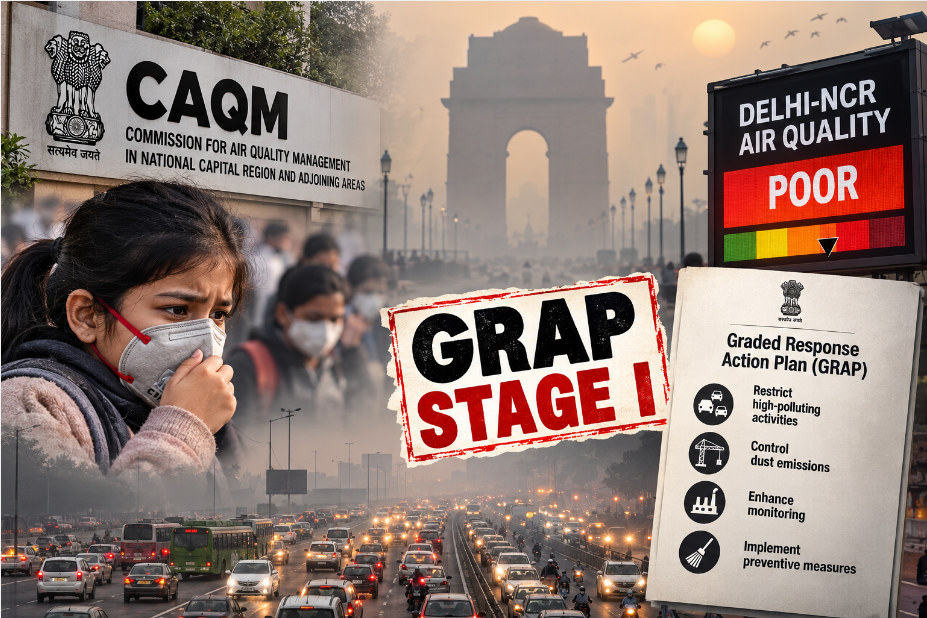
The Commission for Air Quality Management (CAQM) has invoked Stage I of the Graded Response Action Plan (GRAP) across the Delhi-NCR region following a sharp deterioration of air quality into the 'Poor' category. Evolved pursuant to the Supreme Court’s landmark directions in the M.C. Mehta v. Union of India case in December 2016, GRAP provides a graded institutional framework that deploys progressively stricter control measures as the Air Quality Index (AQI) rises.
Originally notified in January 2017 by the Ministry of Environment, Forest and Climate Change, the enforcement was initially handled by the Environment Pollution (Prevention and Control) Authority (EPCA). Today, it is implemented under the statutory authority of the CAQM through state pollution control boards, municipal bodies, transport departments, and traffic police.
The Four Stages of GRAP Control Measures
The GRAP framework mandates specific operational responses divided across four distinct pollution tiers based on the severity of the AQI:
- Stage I (AQI 'Poor' – 201 to 300): Focuses on halting unregistered construction and demolition activities on plots of 500 square metres or more that fail to use dust mitigation portals. It enforces mechanized road sweeping, water sprinkling, the use of anti-smog guns, strict bans on open waste burning, and tight verification of vehicular Pollution Under Control (PUC) certificates. Power distribution companies are mandated to minimize supply interruptions to curb diesel generator usage, while offices are encouraged to start unified employee commutes to reduce road traffic.
- Stage II (AQI 'Very Poor' – 301 to 400): Bans the use of diesel generator sets completely, sparing only essential emergency services such as hospitals, railways, metro systems, airports, water pumping stations, and projects of national importance. It prohibits coal and firewood use in hotel tandoors, enhances municipal parking fees to actively discourage private transport, and augments public transit by procuring additional CNG or electric buses and increasing metro service frequencies.
- Stage III (AQI 'Severe' – 401 to 450): Enforces a sweeping ban on general construction and demolition activities, excluding only linear public projects like highways, flyovers, and critical infrastructure like hospitals or metros. It mandates the closure of industries lacking PNG supplies that do not run on approved fuels, restricting them to operating just five days a week. State governments within the NCR may also impose driving restrictions on older BS-III petrol and BS-IV diesel four-wheelers.
- Stage IV (AQI 'Severe +' – More than 450): Empowers state administrations to close schools, switch offices to 50% capacity with work-from-home models, and implement the odd-even vehicular system. It completely stops the entry of commercial truck traffic into Delhi (except for essential goods, CNG, or electric trucks) and bans out-of-state four-wheeler diesel vehicles below the BS-VI standard. Even linear public construction projects are halted at this stage.
Crucially, to prevent sudden spikes, the restrictive actions under Stages II, III, and IV are structurally designed to be pre-emptively invoked three days in advance of the AQI reaching the projected hazard levels.
Understanding the Air Quality Index
The AQI is a standardized metric ranging from 0 to 500 designed to simplify the common understanding of air pollution for the general public, where higher values indicate progressively hazardous air quality. The index evaluates real-time levels of eight major pollutants:
- Particulate Matter (PM10)
- Particulate Matter (PM2.5)
- Nitrogen Dioxide (NO₂)
- Sulphur Dioxide (SO₂)
- Carbon Monoxide (CO)
- Ozone (O₃)
- Ammonia (NH₃)
- Lead (Pb)
The Power and Jurisdiction of the CAQM
Established through the Commission for Air Quality Management in National Capital Region and Adjoining Areas Act, 2021, the CAQM is a high-powered statutory body that permanently dissolved and replaced the legacy EPCA. The Commission is headed by a chairperson holding the senior rank of a Secretary to the Government of India or a State Chief Secretary.
The CAQM exercises exclusive, overarching jurisdiction over the entire National Capital Region, encompassing parts of Haryana, Punjab, Uttar Pradesh, and Rajasthan. It supersedes all central and state pollution control boards within these territories, wielding the supreme authority to issue binding directives to state governments. To enforce its mandates, the Commission possesses stringent penal powers, enabling it to impose fines of up to Rs 1 crore and hand down imprisonment terms of up to 5 years to any individual or entity that contravenes its pollution directives.
Qatar, Turkiye, Pakistan, and Indonesia Sign Badr MoU to Integrate Defence Industrial Capabilities
A Four-Nation Defence Technology Alliance
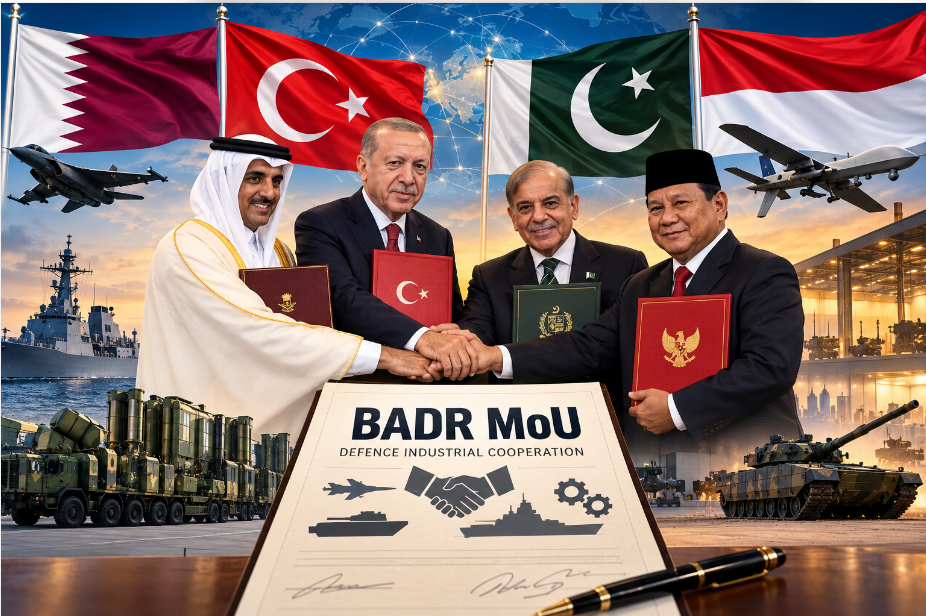
Qatar, Turkiye, Pakistan, and Indonesia have signed the Badr Memorandum of Understanding (MoU) in Doha, Qatar, amid growing regional security concerns. Named after the Arabic word for "full moon" to symbolise the complementary strengths of its members, the initiative is a strategic four-nation defence cooperation pact. The alliance is explicitly designed to strengthen technological self-reliance and integrate the distinct, complementary industrial capabilities of the participating nations. The pact also allows for other friendly countries to join in the future, subject to specific criteria unanimously agreed upon by the four founding signatories.
Strategic Strengths and Resource Allocation
The Badr framework relies on a division of industrial and economic responsibilities based on each member state's national strengths:
- Turkiye: Directs the partnership's technological edge, contributing advanced defence technology, systems integration, and specialized manufacturing expertise.
- Pakistan and Indonesia: Provide large domestic defence markets, robust manufacturing infrastructure, and a highly skilled industrial workforce.
- Qatar: Acts as the primary financial engine, offering substantial investment capacity and financial support to fund complex defence industrial projects.
The alliance focuses on several major objectives, including the promotion of joint defence production, direct technology transfers, joint research and development (R&D) initiatives, and technical military training. By leveraging these shared resources, the member states aim to strengthen their domestic manufacturing hubs and smoothly facilitate cooperation to meet the military requirements of both the signatories and their external allies.
Industrial Cooperation Versus Collective Defence
It is critical to distinguish the Badr MoU from alternative regional treaties. Unlike the Makkah Joint Defence Agreement signed in August 2026—which establishes strict mutual defence commitments between Pakistan, Saudi Arabia, and Turkiye—the Badr MoU does not establish any collective defence obligation. It functions strictly as an industrial and technological partnership rather than a mutual military pact.
Significance for Regional Supply Chains
Signed amid heightened West Asian security tensions, the Badr MoU carries significant geopolitical weight. The agreement is poised to facilitate highly integrated defence supply chains, effectively reducing the participants' long-standing dependence on external Western or global suppliers. Furthermore, by linking nations across the Gulf, South Asia, and Southeast Asia, the initiative successfully diversifies regional security partnerships and establishes a new axis for cross-continental defence industrial manufacturing.